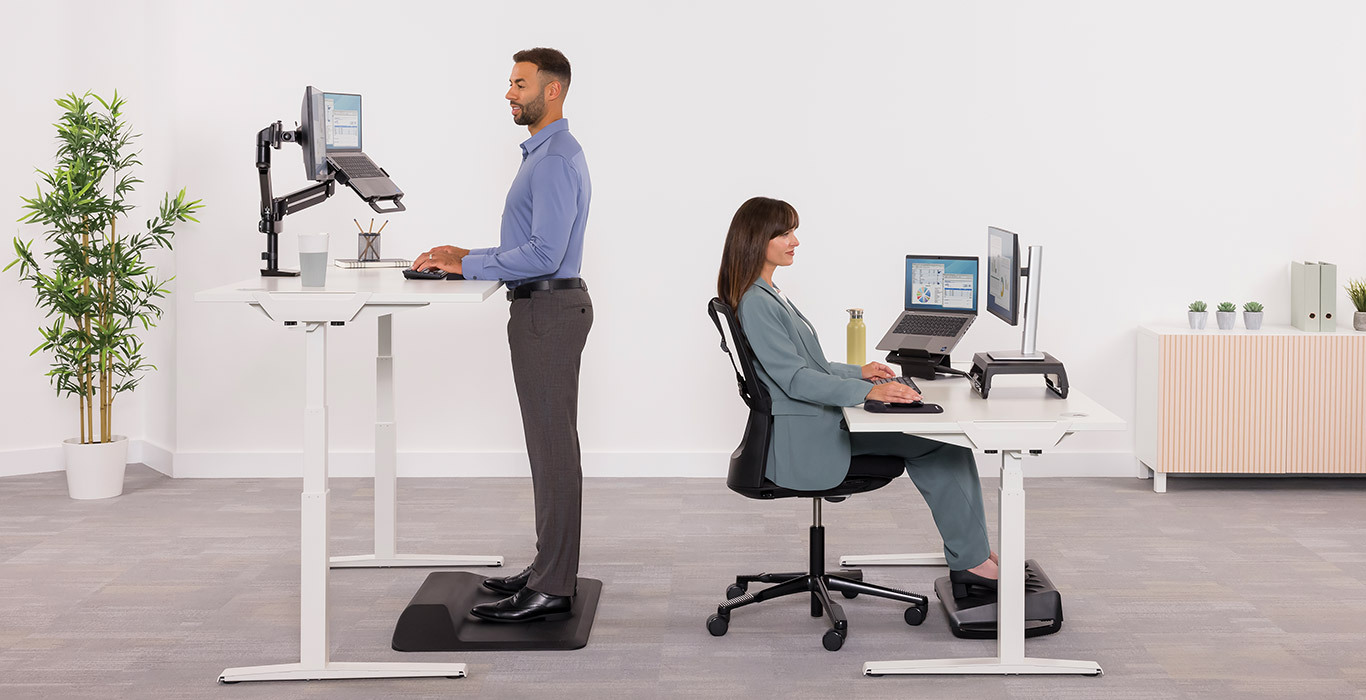
Employee turnover often stems from preventable issues like discomfort and poor workstation design. Unsupported staff lose energy and motivation, which shows how ergonomics supports employee retention and lifts overall comfort.
The solution is simple: create spaces that support how people work and move. With office furniture, ergonomic equipment, and ergonomic chairs, businesses can enhance well-being and build long-term loyalty.
The Impact of Ergonomics on Healthy Office Culture
Workplace ergonomics has a surprising impact on employee wellbeing beyond the obvious benefits like reduced strain and pain. Ergonomics supports employee retention, builds trust and loyalty, and helps people feel good about where they work.
The Impact of Ergonomics on Productivity
When employees adjust their chairs, desks and screens to suit their bodies, they enjoy clear ergonomic benefits at work and stay engaged.
- A national review by Safe Work Australia identified musculoskeletal disorders (such as sprains, strains, and nerve compression) as some of the most common and costly workplace injuries.
- A University of Sydney trial found that staff using sit-stand desks were just as productive while improving posture and comfort.
- A six-month call centre trial found workers using stand-capable desks were about 45% more productive than those seated all day.
The science is clear: good ergonomics improves comfort, which strengthens engagement and boosts workplace productivity.
Learn more: The Impact of Up-Down Desks on Employee Health and Efficiency.
Ergonomics and Employee Satisfaction
Australian employees now see well-being as essential. A recent survey found that 93% of workers value their physical and mental well-being as much as their pay. Modern staff expect employers to invest in their comfort and health, and this expectation strengthens the link between employee well-being and ergonomics.
Comfort directly shapes how employees perform and how long they stay. A study found that offices with sit-stand desks and adjustable furnishings reported higher satisfaction and perceived productivity.
When employers provide comfort and flexibility, they foster a positive environment where employees feel respected and supported, making them more likely to stay long term.
Workplace Ergonomics and Retention
Replacing staff is costly, so many organisations now work to reduce turnover with ergonomics through better design and healthier work habits. Research shows ergonomic programs can cut musculoskeletal disorders by up to 42.2%. One study also found sickness absence dropped from 9.8 to 6.2 days after ergonomic changes.
Deakin University and the Baker Heart and Diabetes Institute found that employees reduced sitting by around 60 minutes a day after 12 months. Researchers estimated that reaching 20% of Australia’s office workers would save 7,492 health-adjusted life years, showing strong ergonomic benefits.
Simple, proactive changes like these help maintain a healthier, more stable team while reducing the hidden costs of attrition.
Learn more: How Poor Desk Setup Impacts Your Focus (and How to Fix It).
Implementing Ergonomic Solutions in Four Steps
A strategic approach to ergonomics boosts comfort, productivity, and long-term well-being. Follow these four steps to create a healthier, more efficient workspace.
-
Evaluate the Current Workspace
Inspect every workstation and identify risks such as awkward posture, poor lighting, or repetitive strain. Ask employees where they feel discomfort to uncover hidden issues early.
-
Set Clear Ergonomic Goals
Define what success looks like. Goals might include reducing discomfort reports, improving productivity, or lowering absenteeism. Clear targets help track progress and guide investment.
-
Invest in Quality Adjustable Equipment
Install height-adjustable desks, ergonomic chairs, and monitor arms that adapt to each worker. Choose durable, certified products that support posture and movement throughout the day.
-
Train and Engage Employees
Show staff how to adjust their setups correctly. Offer brief training sessions on posture, stretching, and regular position changes. Encourage team ownership of their workspace comfort.
Ergolink’s Ergonomic Solutions to Keep an Eye On
Ergolink offers a complete range of ergonomic office solutions that improve posture, increase comfort and support productive workspaces for every environment:
Office Furniture
Upgrade your workspace with high-quality office furniture built for comfort and efficiency. From desks and tables to storage and cable management, our range of office furniture helps you stay organised and supports a professional, collaborative environment.
Ergonomic Equipment
Improve daily comfort with our ergonomic accessories. Choose from adjustable keyboards, mice, document holders, and footrests that minimise strain, support good posture, and make long hours at your desk easier.
Ergonomic Office Chairs
Sit comfortably and maintain a healthy posture with our range of ergonomic chairs. Available in mesh, executive, and heavy-duty designs, each chair offers full adjustability to keep you supported and focused all day.
Small Office Chairs
Experience perfect comfort in a compact design. Our small office chairs feature shorter seat pans, lower gas lifts, and narrower frames, making them ideal for smaller users who need proper support without compromising durability.
Measuring the ROI of Ergonomics
Ergonomic improvements create clear business value when tracked well. They lift comfort, productivity and retention. Start by collecting baseline data on absenteeism, turnover, discomfort and satisfaction. After you introduce ergonomic changes, review these figures often to measure progress.
A reduction in musculoskeletal complaints, fatigue or sick days shows strong gains in employee comfort and productivity. Short, anonymous feedback forms every few months help track perceived changes and keep teams engaged in the process.
Financial results often become clear over time. Lower replacement costs, reduced injury claims, and improved retention all contribute to a strong return on investment. The most successful ergonomic programs are those reviewed and refined regularly. When employees remain healthy, motivated, and productive, your ergonomic strategy is working.
Learn more: Office Furniture Trends in Perth - What’s Popular in 2025.
Making Ergonomics a Core Retention Strategy
Ergonomics is a long-term investment that reduces turnover, lifts satisfaction and attracts employees who value well-being. That’s how ergonomics supports employee retention, helping create workplaces where people feel valued and motivated to stay. Explore Ergolink’s office furniture, ergonomic equipment, and ergonomic chairs to build a workplace that prioritises health and happiness.
Book a meeting online or give us a call at 08 9240 7066 for focused ergonomic support and tailored workplace advice. Choose smart ergonomics from a team that brings proven well-being to Australian workplaces.