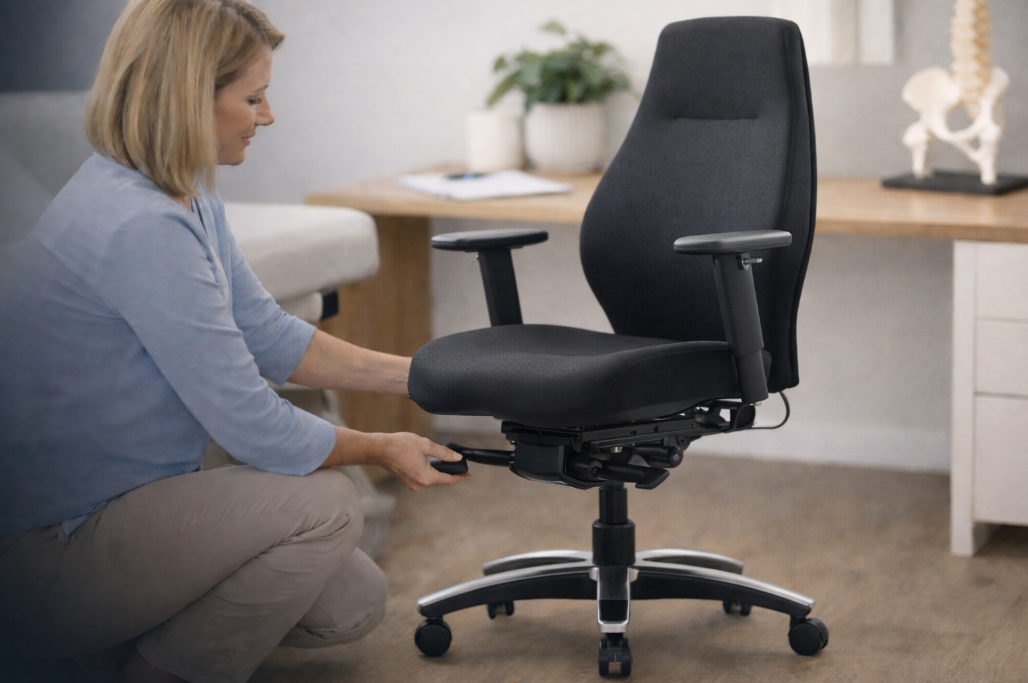
Having the right chair is essential for health and comfort. The beauty of ergonomic seating – and why we are so invested in it – is the flexibility and adaptable features of quality ergonomically designed chairs.
Ergonomic adjustments can be manipulated to personalise a seated position to suit the end user.
These adjustments become particularly important when dealing with mobility challenges, pain or injury support and recovery. With a chair providing comfort that is ‘tweaked’ by small adjustments to lumbar height, back or seat angle, seat depth or seat height, your chair can become your favourite work tool. It just makes your body feel great.
With custom ergonomic seating that works as a system with all parts tailored to you, you’ll notice a difference immediately.
Why Do Personalised Seating Adjustments Matter?
Every body is different, and how thankful we are for that! This also means everybody has a different requirement for comfort and support. Our requirements surrounding the need for an ergonomic chair are wide and varied.
Health conditions, stages of life or injury influence requirements vastly. Some factors might be:
- NDIS participants requiring NDIS seating support
- Limited or restricted mobility concerns
- Neurological conditions
- Sensitivity to posture and pressure
- Injury recovery and rehabilitation
- Proactively seeking to prevent and minimise the impacts of a modern work space
For people with more complex seating needs, the ability to adjust various components of your chair is essential for support.
Why One-Size-Fits-All Doesn’t Work for Everyone
Most chair manufacturers design their products to suit a limited type of user. Since factors like height, leg length, muscle tone, balance, and medical conditions all affect how someone sits, the average chair doesn’t work for everyone.
Common issues with generic seating include:
- Feet not touching the floor
- Pressure behind the knees
- Shoulders elevated or slumped
- Pelvis sliding forward
- Increased fatigue and pain
When your seat doesn’t suit your body, these problems arise fairly quickly. Although ergonomic footrests and back supports can relieve acute issues, the best long-term solution is a customised seating solution built around you.
The Benefits of Custom Ergonomic Seating
Comfort is only one part of good seating design. To truly support people with complex needs, a personalised ergonomic chair should also manage pressure and support long-term muscle and bone health. When your seat matches your body, it can help to:
- Promote neutral spinal alignment
- Distribute pressure evenly
- Reduce risk of pressure injuries
- Improve circulation
- Enhance focus and productivity
However, to ensure the best results from an ergonomic seat, an expert ergonomic assessment and setup is best.
The Role of Occupational Therapists, Physiotherapists or Health Care Professionals in Assessment and Setup
Occupational Therapists (OTs) and Physiotherapists provide valuable clinical insights into your body’s requirements.
Depending on goals, an OT or Physio can work to:
- Evaluate posture and work function needs
- Identify pressure risks
- Overview the features and support required in an ergonomic chair
- Support NDIS funding applications
Using their expertise in body dynamics and mechanics, and suggestions around custom ergonomic seating requirements, you can ensure a correct chair selection for your needs.
Customising Your Seat Depth for Optimal Support
Seat depth can directly impact your circulation, posture, and pelvic stability. When it’s suited to your body, correct seat depth adjustment should allow:
- Full contact along the thighs
- A 2–3 finger gap behind the knees
- Even weight distribution
- Reduced forward sliding
For some users, you might be able to adjust your seat depth yourself. However, if you have more specific needs, such as differences in tone or pelvic positioning issues, you should seek advice from your health care professional.
How to Measure for Correct Seat Depth Adjustments
A quality ergonomic chair allows you to adjust the seat depth to suit your body. To measure:
- Sit upright with your back fully against the backrest
- Measure from your buttocks to the back of the knee
- Subtract 2–5 cm for clearance
Features like a seat slide offer flexibility to help accommodate seated thigh support. A seat slide is a component (usually an optional one) that allows the seat cushion to move back and forth up to 50mm. By doing this, the seat depth can be varied to provide thigh support for various users.
Choosing the Right Foam Density Chair Support
A chair’s foam density supports everything from pressure relief to a stable posture. Referring to the amount of material packed into the foam, options include dual-layer foam systems, moulded foam, memory foam overlays, and gel-infused inserts.
However, it’s not just about choosing a soft or firm foam. For proper support, it must match your needs. For example:
- Low–medium density: softer cushioning
- High density: firmer postural control
- Layered systems: combined support and pressure relief
Good ergonomic chair manufacturers typically offer options and variations in seat technology and sizes that help support individual requirements. So if pressure relief, a coccyx cutout or sculpted comfort is your preference, there will usually be a solution.
Getting Armrest Positioning Right
The great Armrest question: yes or no?
Armrests are typically not recommended in most ergonomic workstation setups. Mainly because they can prevent the chair from getting close enough to the desk to ensure a great seated position.
They have also been known to encourage leaning or repositioning in the chair, putting the spine and hips out of alignment.
That said, there are circumstances that require armrests. For instance, in an injury recovery scenario, perhaps in the support and steadying of a tremor, or for added support when getting into and out of the chair. Sometimes it is simply the feeling of security.
If armrests are used, position them higher or lower than the desktop so the chair can be maneuvered into a healthy seated position. Adjust the height to prevent shoulders and elbows from lifting or scrunching into the neck.
Empowering Daily Life Through Personalised Seating Solutions
Every body is different, and the right chair makes a world of difference. Whether you need tailored seat depth, specific foam density, or custom armrests, Ergolink offers custom ergonomic seating solutions built around you.
Visit our Perth showroom or explore our range online to find seating that truly supports comfort, health, and independence.